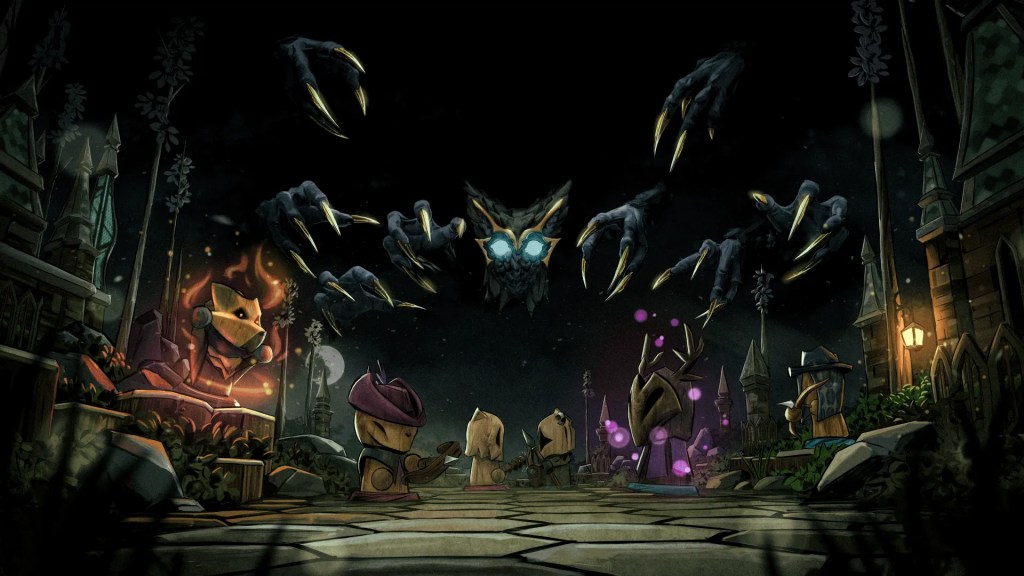
Image credit: Steam Store Page
Playtime: ~10 hours (Story Finished)
Completion: Finished
Platform: PC / Steam Deck
Played / Reviewed: 2025
Genre: Tactical Roguelite / Turn-Based Strategy / Atmospheric Puzzle
Final Score: ★★★★☆ (8/10)
🧠 First Impressions
Inkshade immediately gave me Inscryption vibes with its eerie tone and layered gameplay. From the moment you sit at the table opposite a shadowy figure, the game sets its atmosphere: you’re not just playing with wooden pieces—you’re bargaining with the abyss itself.
It’s dark, challenging, and dripping with ambience. But unlike most hand-holding strategy games, Inkshade trusts you to figure things out through trial and error, making each discovery feel earned.
⚙️ Gameplay & Progression
Most of the action happens at the table, where you move your crew of wooden pieces across tactical battlefields. Battles are turn-based, deceptively simple (move, then attack), but still surprisingly punishing. The enemy AI is smart enough to target your weakest units, forcing you to think carefully about positioning.
As you beat locations the game master will keep giving you keys to unlock new locations on the ship. These new spaces aren’t just decoration—they hide coins, puzzles, and new pieces to recruit. Coins feed into upgrades, which you’ll need to keep up with the ever-escalating difficulty.
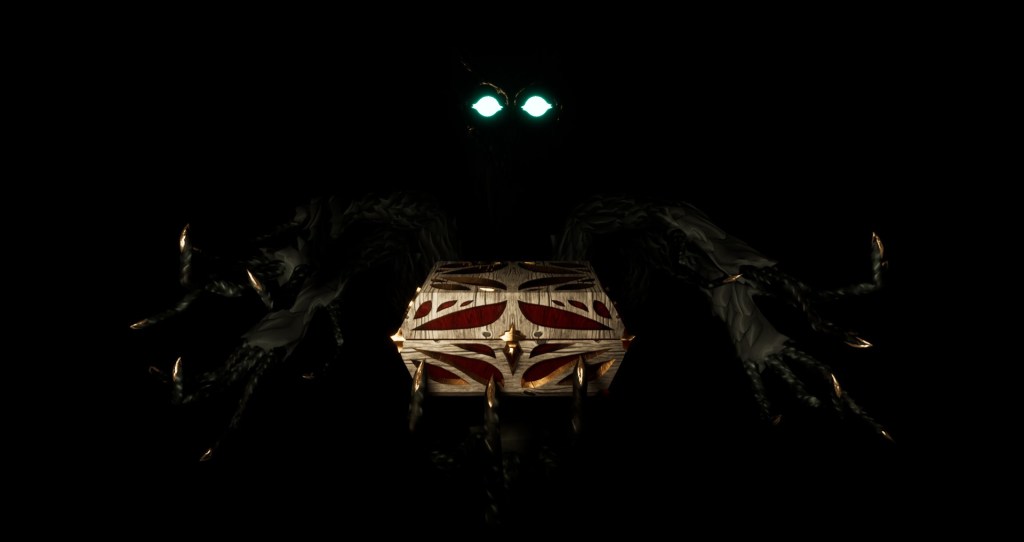
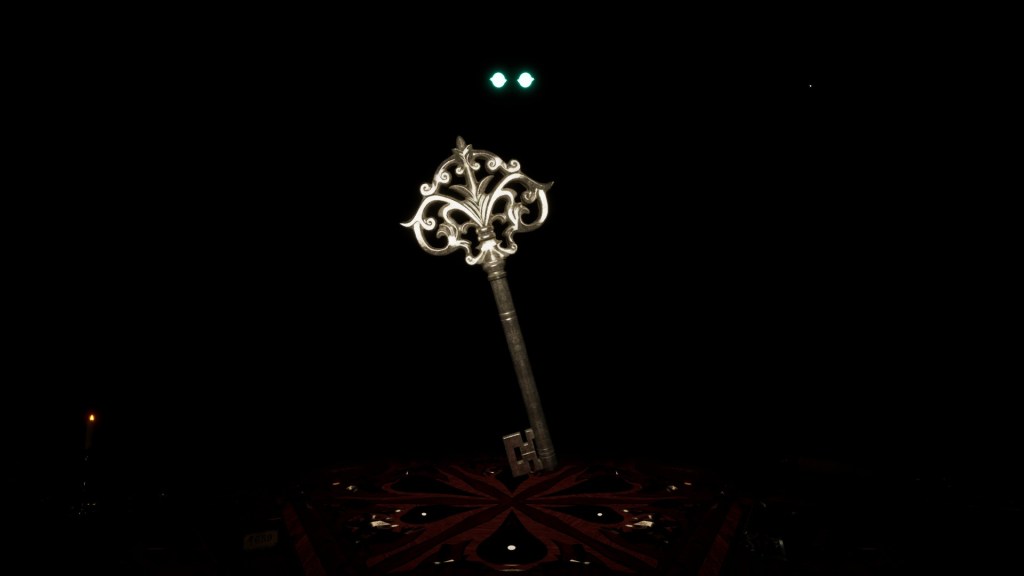
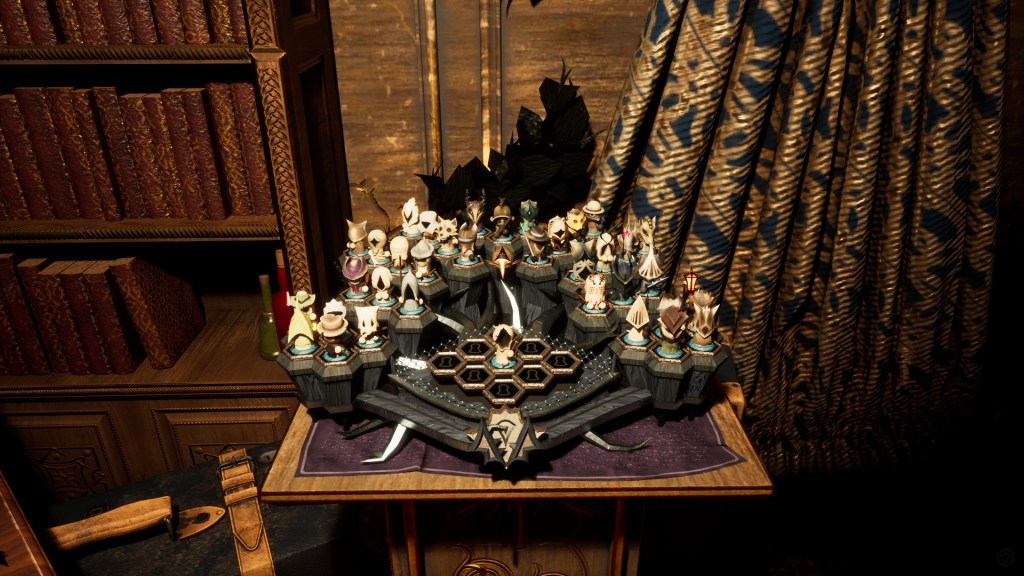
Image Credit: In-game
Progression is brutal but rewarding. You’ll constantly lose pieces in fights, but victories let you recruit replacements or upgrade survivors. Three regions make up the world, each with unique challenges, all leading toward building your airship.
🧩 Puzzles & Atmosphere
Puzzles are the main factor why this Inkshade avoids becoming a repetitive game. After countless tense battles at the table, you can step away to explore the surrounding rooms. Each unique room introduces itself through a new puzzle, keeping exploration fresh and rewarding.
What’s clever is that every decoration in these rooms is interactable—but not necessarily important. It keeps you guessing which objects matter and which are just part of the ambience, amplifying the game’s spooky, experimental vibe.
This design keeps the rhythm of the game balanced: battles test your tactical skill, while puzzles refresh your brain and keep curiosity alive. It’s a great loop that makes the whole experience more immersive.
🎮 Combat & Challenge
Combat might look simple at first, but Inkshade thrives on its restrictions. Standing on victory tiles, eliminating all foes. There is no time limit on the turns to restricting you from combat but you want more coins I suggest finishing the combat early.
The main difficulty comes from the pieces that you have to use early in the game. Many of them are far from optimal, and learning how to manage a less-than-ideal crew is part of the challenge. That is… until you realize that the first piece you get, the Wretch, is an absolute monster when played correctly. If you commit to upgrades early, Wretch’s defense becomes so high that most enemy attacks barely scratch it, turning it into a reliable early-game carry. PLEASE TAKE A LOT AT THESE STATS:
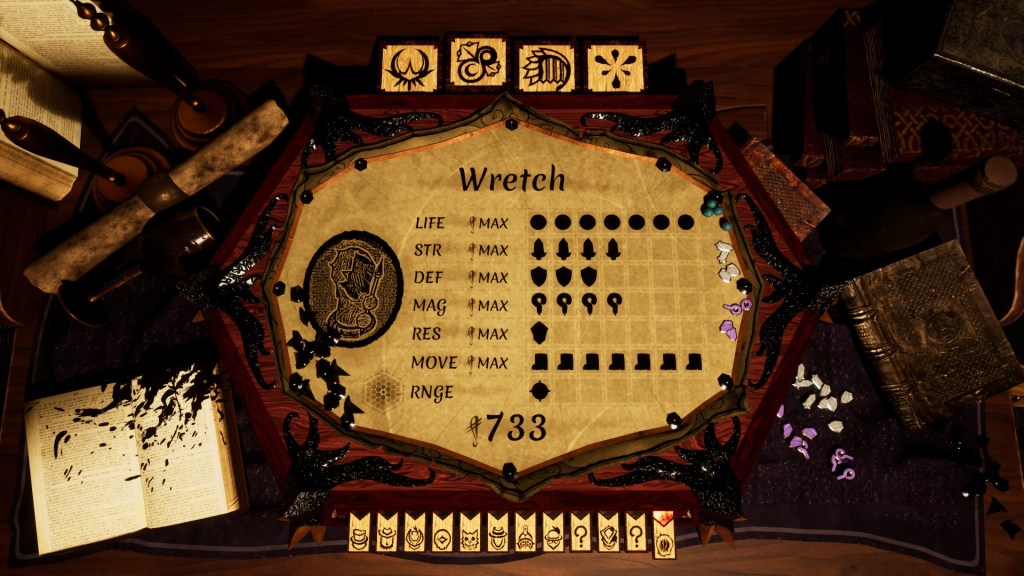
Image credit: In-game
As the picture shows these stats are the main difficulty of the game, just like your pieces the enemy pieces will have their own respective Health, Strength, Defense, Magic, Resistance, Move and Range stats. But don’t be fooled as all pieces have different maximum stats.
WRETCH SOLO COMBAT:
Eventually, as you unlock the final three monster pieces, Wretch transitions from unstoppable wall into a solid team support. But until then, it’s your lifeline—figuring out how to leverage it is a key moment in mastering Inkshade.
The downside? Battles can feel repetitive, since the mechanics are limited to move + attack, but the difficulty curve and clever enemy AI ensure you’re always being tested.
🎵 Music, Art, and Atmosphere
Studio Vezelle nailed the ambience. The art style leans minimalist but atmospheric, the shadowy figure at the table is unnerving, and the music layers on just enough creep to keep you unsettled. Playing on both PC and Steam Deck felt seamless, which is impressive for a solo developer project.
📝 Category Breakdown
- Gameplay: 8/10 – Simple mechanics, but depth through design and difficulty.
- Story/Atmosphere: 9/10 – Spooky and effective without over-explaining.
- Combat: 7/10 – Smart, challenging, but can feel repetitive.
- Exploration: 8/10 – Rooms and secrets keep the pacing fresh.
- Overall: 8/10 – A strong entry from a solo dev.
✅ Final Verdict
Inkshade isn’t for everyone. It’s demanding, vague, and occasionally punishing. But for players who enjoyed Inscryption or crave a dark, tactical roguelite dripping with atmosphere, this game is a must-play. It’s clever, it’s unsettling, and it rewards experimentation in ways most games wouldn’t dare.
🔥 Clay’s Take
This game nailed exactly what I wanted: a spooky, strategy-heavy roguelite that forces me to think differently every run. The room exploration, the creepy vibe, the tactical fights—it all clicks. Not perfect, but absolutely memorable.
Final Score: ★★★★☆ (8/10)
Recommendation: Highly recommended if you like Inscryption or dark, experimental tactics games.
 All Game, No Filter
Leave a comment